
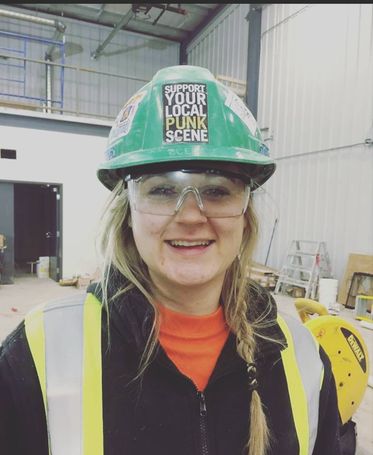
When I returned home to Ontario after working in construction in Alberta, I was at my lowest point mentally. I knew I needed to make a change, but I had no idea where to start — so I dove headfirst into finding therapy. Any therapy.
I was desperate to feel better, to stop feeling so weighed down, and to start living my life again. I reached out to multiple therapists (some with long waitlists), enrolled in free art and group therapy programs, and tried anything that offered hope. It felt like throwing spaghetti at the wall to see what stuck. Navigating the mental health system was overwhelming, and I didn’t know what would help.
Looking back, I realize that every effort mattered. Each session, every hour spent unpacking my pain and learning how to build a new life, added up. It was humbling, uncomfortable, and painfully slow at times. But every small step forward was a brick laid in the foundation of a new version of myself. I didn’t know where I was going, but I knew I couldn’t go back.
One of the most impactful therapies I tried was EMDR. Revisiting past trauma and helping my brain process it was incredibly painful — but also brought the most relief. I remember leaving one session feeling physically lighter, like I had dropped an invisible backpack I didn’t realize I was carrying. I often describe these sessions as “combing my brain,” because we’d take a memory, sort through it, and allow hidden layers of emotion to surface.
I’ll never forget the session where we worked through my experience in Fort McMurray. After processing the bullying and harassment, what surfaced underneath was grief — grief for the career I had lost. I truly loved my job in construction. I loved the hands-on work, the camaraderie, and the satisfaction of building something tangible. I was good at it, and I had a lot of fun. That loss had been buried beneath a shell of protection, but when I finally felt the grief, I understood its weight.
The truth is, if it weren’t for the harassment, bullying, and psychologically unsafe workplaces, I would have stayed. And that’s the heartbreaking reality — we lose good people in industries they love because the environment becomes too harmful to endure.
So, how do we stop this from happening? How do we keep great workers from walking away?
It starts with psychological safety. Companies need to create environments where workers feel valued, protected, and respected. That means having clear policies that actually get enforced—not just words in a handbook. It means leaders who don’t just look the other way when harassment happens, but actively step in to stop it. It means making sure employees know they can report concerns without fear of retaliation.
But beyond policies, it’s about culture. If the culture normalizes bullying, hazing, or harassment, nothing changes. Leaders need to set the tone by modeling respect, holding people accountable, and ensuring their teams know that safety—both physical and psychological—is non-negotiable.
Retention isn’t just about wages or benefits. It’s about making people feel like they belong. When workplaces fail to foster a sense of safety and respect, they don’t just lose employees—they lose knowledge, experience, and talent that may never return.
Losing skilled, passionate workers is a loss on every level. It’s a loss to the individual who had to walk away from a job they loved. It’s a loss to the team that relied on their expertise. It’s a loss to the industry as a whole, which continues to struggle with retention and recruitment, especially in trades and male-dominated fields.
If organizations truly want to stop this cycle, they need to recognize that psychological safety isn’t an optional perk—it’s the foundation of keeping people engaged, committed, and thriving. When people feel safe, they stay. And when they stay, they build stronger teams, better workplaces, and a more sustainable future for their industries.
Beyond losing a career, I lost parts of myself. During my time in construction, I envisioned myself as someone who would always be handy around the house, fixing things here and there. But shortly after I returned home, I gave away most of my tools. I lost interest. I didn’t want to see them anymore. It felt like giving away a piece of my identity, but I convinced myself someone else could use them more.
I lost the momentum I had built, the experience I had worked so hard to gain, and the money I had invested in my future in the trades. More than that, I lost my sense of direction. I had no idea what industry to go into or where to go next. It felt like starting from the bottom all over again.
I lost my sense of safety in the world, constantly feeling mistrustful and on edge in social situations. I lost my sense of safety at work, wondering if I would ever feel confident, capable, or respected in a workplace again. Vulnerability and fragility replaced the resilience I had once built, and I questioned how I would even begin to work again.
This is what happens when workplaces fail their people. The loss isn’t just a resignation letter—it’s a loss of potential, of security, of the future they envisioned for themselves. And that is something we should all care about.
I share this because healing is messy. Recovery doesn’t follow a straight path, and it rarely comes quickly. But every step forward, no matter how small, is progress. And for workplaces, the message is clear: if you want to keep your best people, build an environment where they feel safe enough to stay.
I believe in working smarter, not harder! AI helps me refine my thoughts, but the heart and soul of this post are all mine.